
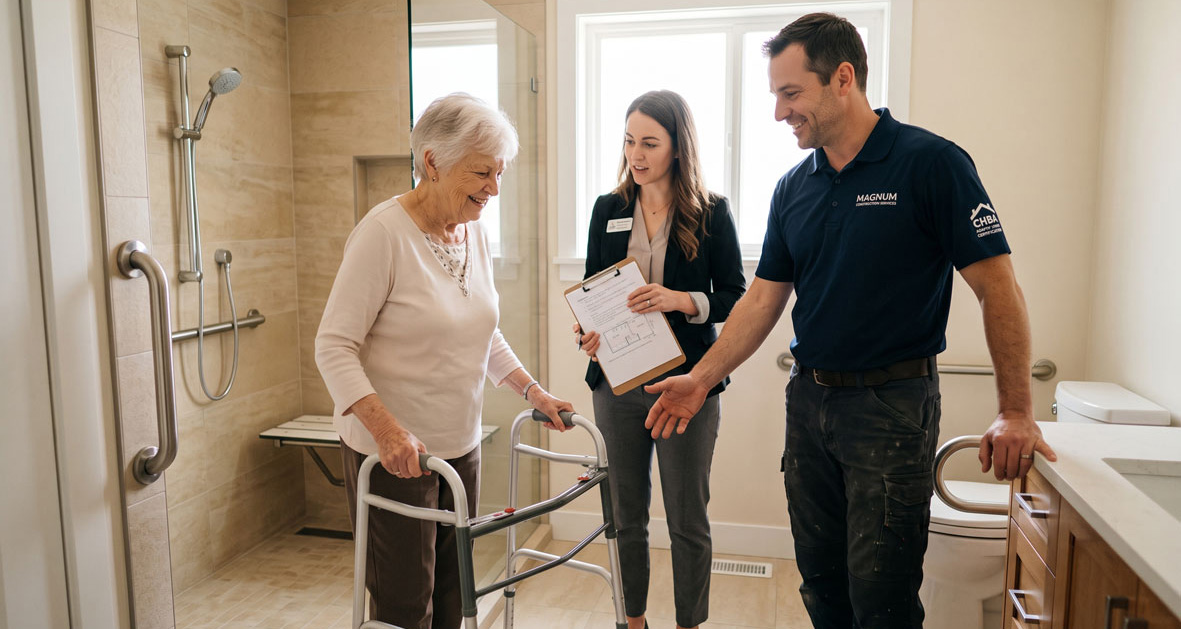
For many homeowners, a house is much more than a building. It is where families have grown, memories have been made, and life has unfolded over many years.
As we age, however, the homes we love can sometimes become more challenging to navigate. Stairs become more difficult, bathrooms present safety concerns, and everyday tasks may require more effort than they once did. While some people assume moving is the only solution, many homeowners have a different goal: they want to remain in the community they know, close to friends, family, neighbours, healthcare providers, and the places that are important to them.
This is where aging in place becomes an important conversation.
What Does Aging in Place Mean?
Aging in place simply means having the ability to live safely, comfortably, and independently in your own home as your needs change over time. Rather than waiting until mobility or health challenges arise, many homeowners are choosing to proactively adapt their homes to better support their future needs. The goal is not to make a home look institutional or medical. The goal is to create a home that continues to work for the people living in it.Why More Homeowners Are Choosing to Age in Place
Moving later in life can be emotionally and financially challenging. Leaving a familiar neighbourhood often means leaving behind long-standing relationships, routines, and a sense of community. Many homeowners would rather invest in improving the home they already love than relocate to an unfamiliar environment. Thoughtful renovations can help make that possible by creating safer, more functional living spaces while maintaining the comfort, beauty, and character of the home.Planning Ahead Creates More Options
One of the biggest misconceptions about adaptive home renovations is that they are only needed after an injury or health event. In reality, the most successful projects are often completed before they become necessary. Planning ahead allows homeowners to make thoughtful decisions, incorporate accessibility features seamlessly into the design, and avoid costly emergency renovations in the future. Small improvements made today can have a significant impact on comfort, safety, and independence tomorrow.What Does an Aging-in-Place Renovation Look Like?
Every homeowner’s needs are different, but common improvements may include:- Barrier-free showers and safer bathroom layouts
- Improved lighting throughout the home
- Wider doorways and improved circulation space
- Easier-to-access kitchens and storage solutions
- Better stair and handrail design
- Smart home technology for convenience and safety
- Improved entrances and zero-step access