Most homeowners don’t think about how they move through their home until something changes.
A knee replacement, a mobility limitation, an injury, reduced balance, or simply the natural aging process can suddenly make everyday movements more difficult. A small step at the front entrance, a narrow hallway, or a staircase that was never a concern before can become a daily challenge.
At Magnum Construction Services, we believe a home should support you at every stage of life. As Certified Adaptiv Home Specialists through the Canadian Home Builders’ Association (CHBA), we help homeowners identify potential barriers and create practical solutions that improve safety, accessibility, and independence.
Looking Beyond Today’s Needs
One of the biggest mistakes homeowners make is waiting until a mobility issue arises before considering modifications. The most successful adaptive renovations are often completed before they become necessary. Planning ahead allows homeowners to remain comfortable, independent, and confident in their homes while preserving the beauty and value of the property.Creating Safer Entrances
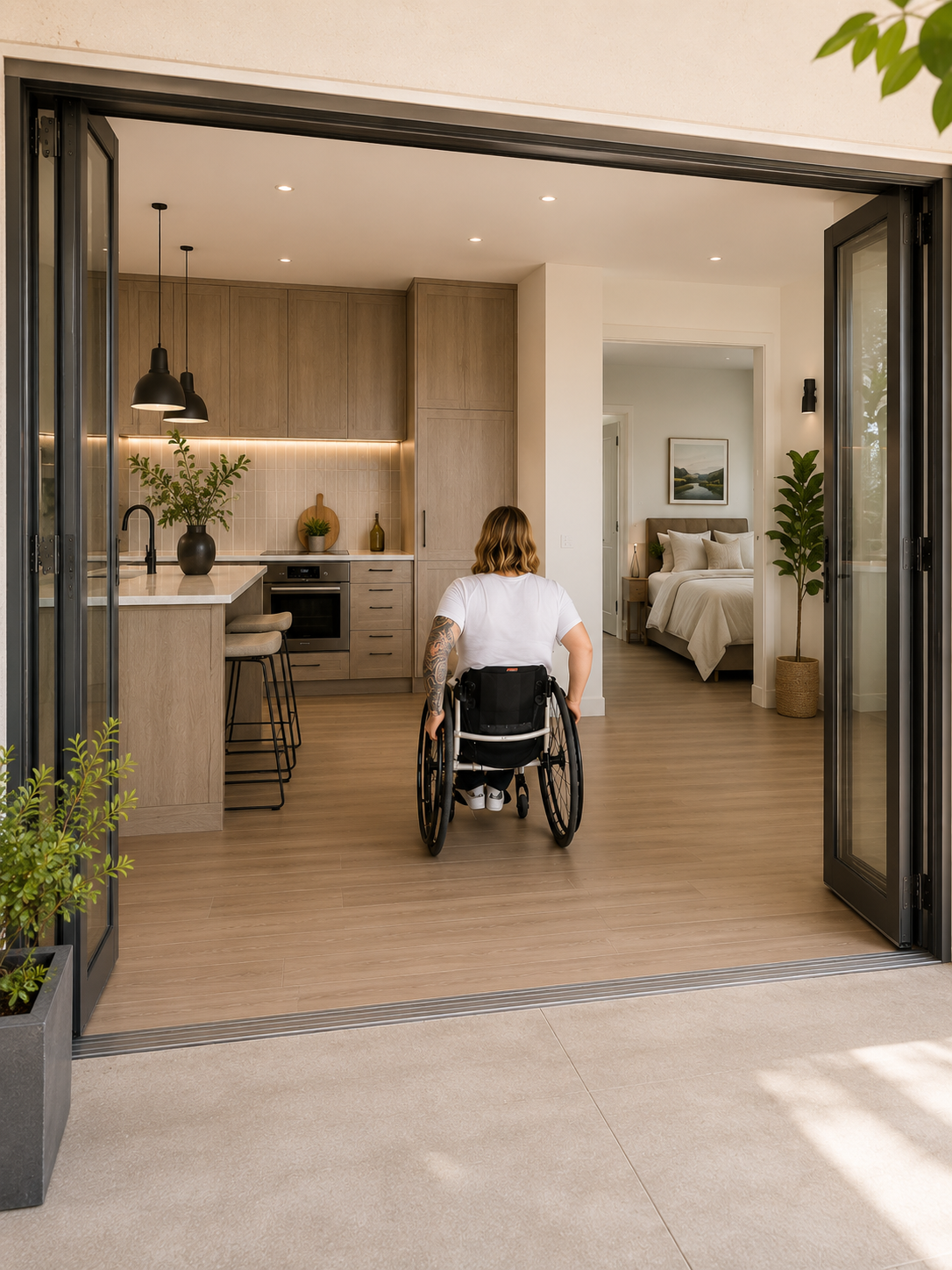
For many homes, the first barrier begins at the front door. Even a single step can create difficulties for someone using a walker, wheelchair, scooter, or recovering from an injury. Adaptive entrance solutions may include:- Zero-threshold entrances
- Gentle sloped walkways
- Permanent ramps
- Improved exterior lighting
- Wider entry doors
- Covered entrances for weather protection
Stair Safety Improvements
Stairs are one of the most common locations for falls within the home. Simple improvements can significantly increase safety and confidence, including:- Handrails on both sides
- Improved stair lighting
- Contrasting stair nosings for better visibility
- Consistent tread and riser dimensions
- Non-slip stair surfaces
- Improved landings and turning areas
When Stairs Become a Barrier
For some individuals, stair improvements alone may not be enough. When navigating stairs becomes difficult or unsafe, there are several options available depending on the home and the homeowner’s needs.Stair Lifts
Stair lifts provide a practical solution for homeowners who have difficulty using stairs but wish to remain in a multi-level home. Modern stair lifts are compact, reliable, and designed to blend into the home while providing safe access between floors.Vertical Platform Lifts
For homeowners using wheelchairs or mobility devices, a vertical platform lift may be an excellent alternative to a ramp where space is limited. These lifts provide safe access between different elevations while accommodating mobility devices directly.Home Elevators
For larger homes or long-term aging-in-place planning, residential elevators can provide convenient access between floors while increasing accessibility and future-proofing the home.Improving Mobility Throughout the Home
Movement challenges are not limited to entrances and stairs. We assess how homeowners move through every part of the home and identify opportunities to improve comfort and accessibility. This may include:- Wider hallways and doorways
- Improved room layouts
- Better maneuvering space
- Reduced trip hazards
- Improved flooring transitions
- Enhanced lighting throughout the home